
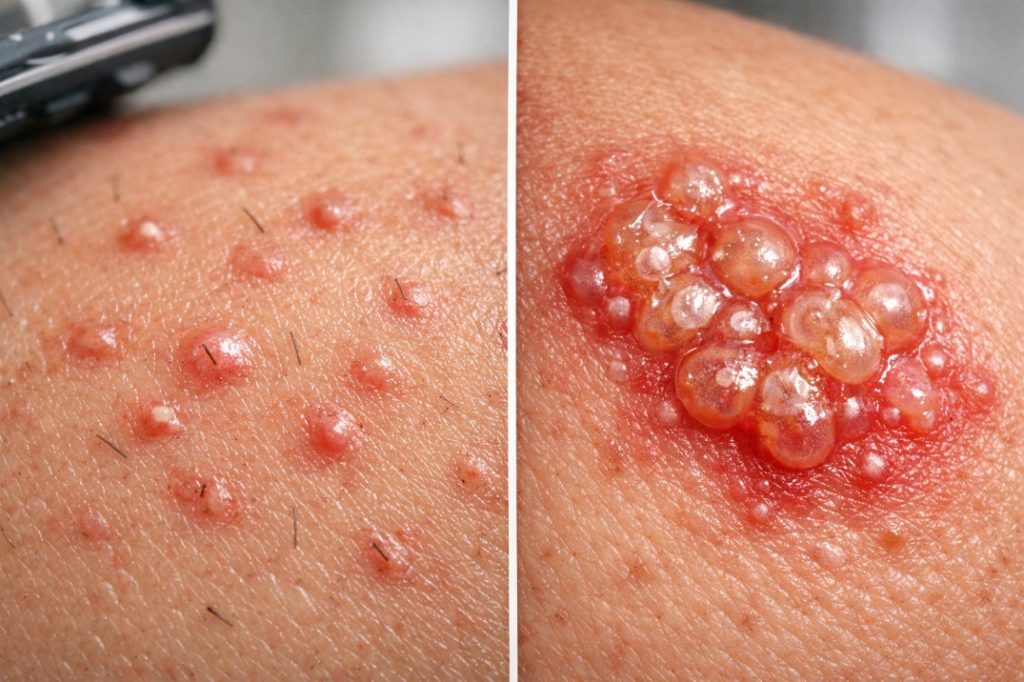
You reach for your phone, type your symptoms into a search bar, and suddenly your brain goes to the worst place. One minute, you’re wondering if that bump is from shaving. Next, you’re convinced something is seriously wrong. Sound familiar? You’re not alone in this.
The question of shaving bumps or STDs is one of the most common and most anxiety-inducing searches in sexual health, and for a reason. Both conditions can look almost identical in the mirror, which makes self-diagnosis feel impossible.
But, with the right knowledge, you can make a far more informed call about what your skin is actually telling you. This guide walks you through the real differences, the warning signs that mean you need a doctor, and what you can do to protect yourself going forward.
What Are Razor Bumps – and Why Do They Happen?
Razor bumps, medically called pseudofolliculitis barbae, happen when a shaved hair curls back and grows into the skin instead of outward. Your body treats that re-entering hair like a foreign object, which triggers an inflammatory response – and that’s what produces the bumps, redness, and tenderness you see.
They can appear anywhere you shave: your face, neck, bikini line, legs, underarms, or pubic area. People with curly or coarse hair are more likely to get them, but anyone who shaves can end up with razor bumps, especially when using a dull blade, shaving against the direction of hair growth, or skipping a proper shaving cream.
What Razor Bumps Typically Look Like
Knowing what you’re actually looking at matters. Razor bumps typically appear as:
- Small, red, raised bumps that sit strictly within the area you recently shaved
- Occasionally pus-filled, resembling a whitehead pimple
- Sometimes showing a tiny dark dot or a coiled hair at the center
- Mildly itchy or tender, but rarely painful
- Darker patches or hyperpigmented spots as they heal, particularly in people with darker skin tones
How Long Do Razor Bumps Last?
Most razor bumps clear on their own within 3 to 7 days with proper care. If your bumps stick around beyond a week, get more painful over time, or start appearing outside the area you shaved, that’s when you need to look deeper into what’s actually going on.
STDs That Cause Similar Bumps
STDs That Can Look Like Razor Bumps or Shaving Irritation
Several STDs and STIs cause skin changes that are easy to confuse with shaving irritation. Knowing what each one looks like and how it behaves is the most reliable way to tell them apart from harmless ingrown hairs.
1. Genital Herpes (HSV-1 and HSV-2)
Herpes is caused by the herpes simplex virus. HSV-1 typically causes oral herpes, while HSV-2 most commonly affects the genitals, though either type can appear in either location. Herpes is the STD most often confused with razor bumps, which is exactly why the razor burn vs herpes question comes up so frequently.
Unlike razor bumps, herpes sores appear as fluid-filled blisters that form in clusters. They rupture and leave raw, tender ulcers that can take 2-4 weeks to heal during a first outbreak. Most importantly, herpes recurs; once you have it, the virus stays in your body for life.
2. Genital Warts (HPV)
Certain strains of the human papillomavirus cause genital warts, flesh-colored, soft growths that are sometimes described as cauliflower-shaped. They’re usually painless but can cause itching or mild discomfort. Unlike razor bumps, they won’t go away on their own and need medical treatment.
3. Syphilis (Primary Stage Chancre)
In its earliest stage, syphilis produces a single, painless sore called a chancre at the site of infection. It’s easy to mistake for a bump or pimple, but syphilis sores are typically round, firm, and may come with swollen lymph nodes nearby.
4. Molluscum Contagiosum
This viral skin infection produces small, round, flesh-colored bumps with a visible dimple in the center. It spreads easily through skin-to-skin contact, including sexual contact, and can appear anywhere on the body.
Razor Bumps vs. Herpes
| Feature | Razor Bumps | Herpes Sores |
| Cause | Ingrown hair from shaving | Herpes simplex virus (HSV) |
| Appearance | Red, raised; may have pus; coiled hair visible | Fluid-filled blisters in clusters; rupture into ulcers |
| Location | Only in shaved areas | Anywhere in/around genitals or mouth, including unshaved areas |
| Pain Level | Mild tenderness or itch | Often painful or burning, especially when touched |
| Systemic Symptoms | None – localized only | Fever, headache, body aches, swollen glands, possible |
| Duration | 3–7 days; resolves on its own | 2-4 weeks (first outbreak); recurs over lifetime |
| Contagious? | No | Yes – even without visible sores |
| Cure | Yes – resolves with proper care | No cure; managed with antivirals |
| Triggered By | Shaving, waxing, curly hair | Stress, illness, hormonal changes, and sun exposure |
Razor Burn vs. Herpes: The Clearest Differences to Look For
When people search for the difference between herpes and shaving bumps, what they’re really looking for is a practical framework, not just a list of symptoms. Here’s the same approach doctors use for a first assessment.
The 5 Questions to Ask Yourself
1. Where exactly are the bumps? If they sit strictly within the area you shaved, that points toward razor bumps. Bumps in unshaved areas, inside the vaginal lips, or on the cervix suggest something else is going on.
2. Are the bumps filled with clear fluid? Watery, fluid-filled blisters are a hallmark of herpes. Pus-filled bumps with a dark center lean toward ingrown hairs.
3. How painful are they? Razor bumps are mildly uncomfortable at most. Herpes sores are often distinctly painful, with a burning or intense itching sensation that’s hard to ignore.
4. Do you feel unwell? Flu-like symptoms: fever, body aches, fatigue, swollen lymph nodes, and genital bumps are a red flag for herpes, not shaving irritation.
5. Have they come back before? Recurring outbreaks in the same spot are a defining characteristic of herpes. Razor bumps don’t follow that pattern.
Razor Burn vs. Herpes: The Appearance Timeline
Razor bumps appear within 24-48 hours after shaving and look like small red pimples or a patchy rash on freshly shaved skin. Herpes, on the other hand, moves through distinct stages: initial tingling or itching → clusters of small blisters → rupture → crusting → healing. Watching how things progress over a few days tells you far more than any single moment in the mirror.
To put it plainly: razor burn shows up as a patchy skin rash, and ingrown hairs present as small, red pimple-like bumps. Herpes bumps form in clusters and look like fluid-filled sores or blisters. Even after individual herpes sores heal, they will always come back.
Important: Don’t Rely on Appearance Alone
Even experienced healthcare providers can struggle to tell herpes apart from other skin conditions by sight alone. The appearance of both conditions can overlap, especially in the early stages. The only way to confirm herpes is through lab testing. A swab of active sores or a blood test gives you a definitive answer, and nothing else does.
Other Conditions to Consider
It’s Not Always One or the Other: Other Causes of Genital Bumps
The razor bumps or STD question doesn’t always come down to just two possibilities. Several other conditions produce skin changes that look similar:
- Folliculitis: A bacterial or fungal infection of the hair follicle that causes red, pus-filled bumps, very similar to razor bumps, but not caused by shaving.
- Contact Dermatitis: An allergic or irritant reaction to shaving cream, soap, latex condoms, or detergent that results in a red, itchy rash.
- Fordyce Spots: Harmless, small white or yellowish bumps that are simply sebaceous glands visible on the skin, not infectious, not contagious.
- Scabies: A mite infestation that causes intense itching and a bumpy rash in the genital region, and is sexually transmissible.
- Cysts: Sebaceous or epidermoid cysts are slow-growing, firm lumps under the skin, are not contagious, and are not STD-related.
When Should You See a Doctor?
Razor bumps are usually harmless and sort themselves out. But certain signs mean you need a professional evaluation, and you shouldn’t wait.
Red-Flag Signs – Don’t Wait
- Bumps persist for more than 7-10 days without improvement
- Bumps appear in unshaved or unexpected areas
- You feel burning, tingling, or pain before the bumps even appear
- You notice fluid-filled blisters, especially in clusters
- Symptoms appear alongside fever, body aches, or swollen lymph nodes
- Bumps return in the same location after healing
- You’ve recently had unprotected sex or a new sexual partner
- You have a history of STDs and notice new symptoms
A healthcare provider can examine the area and run the tests needed for a clear diagnosis, including an STD panel, swab cultures, or blood tests for herpes antibodies. Testing is the only way to be certain.
Treating Razor Bumps: What Actually Works
If you’ve ruled out an STD and confirmed you’re dealing with razor bumps, here’s what actually helps.
Home Remedies
- Warm compress: A warm, damp cloth opens pores and helps trapped hairs work their way out naturally. Use it twice a day.
- Aloe vera: Apply directly to the affected area to calm inflammation and speed up healing.
- Exfoliation: Gentle exfoliation removes dead skin cells that may be trapping hairs below the surface.
- Witch hazel: A natural astringent that cuts redness and inflammation without harsh chemicals.
- Coconut oil: Softens the skin and keeps it moisturised, which helps prevent new razor bumps from forming.
Medical Treatments
- Over-the-counter hydrocortisone cream to reduce inflammation
- Topical retinoids (prescription) to speed up cell turnover
- Antibiotic creams, if the bumps have become infected
- Laser hair removal for persistent, severe cases
One rule that applies to all of the above: do not squeeze or pop razor bumps. It makes inflammation worse, increases your risk of infection, and can cause scarring or lasting dark marks.
Prevention: Reducing Razor Bumps and Protecting Against STDs
A few consistent habits go a long way toward reducing your risk of both razor bumps and sexually transmitted infections.
Prevention Checklist
- Talk to new partners about testing and status before sexual contact
- Shave in the direction of hair growth, never against it
- Always use a sharp, clean blade and replace it regularly
- Wet your skin thoroughly and use a lubricating shaving cream
- Apply an alcohol-free moisturizer or aloe vera after every shave
- Avoid tight clothing immediately after shaving the pubic area
- Use condoms consistently to reduce STD transmission risk
- Get regular STD testing if you are sexually active
Not 100% Sure? Get Tested.
The only definitive answer comes from a test, not a mirror. STD testing is fast, confidential, and available at clinics, urgent care centers, and through at-home test kits. If something feels off, get tested. It takes far less time than weeks of unnecessary worry.
Frequently Asked Questions
Can shaving bumps and herpes appear at the same time?
Yes, both conditions can occur at the same time. Shaving irritation does not protect against or cause herpes. If you have both, they need separate approaches: home care for razor bumps and antiviral medication for herpes.
Can I get herpes from shaving?
No. Herpes spreads through skin-to-skin contact with an infected person, not through shaving. That said, micro-cuts from shaving can theoretically make it marginally easier for the virus to enter the skin if you’re exposed to it afterwards.
How quickly do herpes sores appear after exposure?
The first herpes outbreak typically appears 2–12 days after exposure. Some people have no symptoms at all during the initial infection, and their first noticeable outbreak may not appear until months or even years later.
Is it possible to have herpes without ever having an outbreak?
Yes. Many people infected with HSV-1 or HSV-2 are asymptomatic or have symptoms so mild that they never notice them. The virus can still spread to partners even when no sores are visible, this is called asymptomatic shedding.
Should I stop shaving while treating razor bumps?
Yes, temporarily. Stop shaving the affected area until the bumps heal completely. Continuing to shave over irritated skin slows down recovery and raises your risk of infection.
What is the difference between razor burn and razor bumps?
Razor burn is immediate skin irritation, redness, stinging, and a mild rash that appears right after shaving. Razor bumps develop 24-48 hours later as hair grows back into the skin. Both can look similar to STD-related skin changes, but neither is infectious.
The Bottom Line
The razor bumps or STD question doesn’t always have an obvious answer, and that’s okay. What matters is that you don’t write off persistent, unusual, or worsening skin changes as “just shaving irritation.”
In short, razor bumps stay within the shaved area, appear within 1-2 days of shaving, heal within a week, and never come with systemic symptoms. Herpes sores form in clusters, carry a burning or painful sensation, can appear in unshaved areas, bring flu-like symptoms during the first outbreaks, and keep coming back over time.
If you feel any doubt, test. Getting an std testing mesquite tx is quick, private, and infinitely better than sitting with weeks of anxiety. Your skin is sending signals. Make sure you understand what they actually mean.