
A UTI and a yeast infection look similar on the surface, but they are completely different infections that need completely different treatments. If you treat one as the other, you’ll get no relief, and in the case of an untreated UTI, the infection can spread to your kidneys and become a much bigger problem.
Up to 75% of women will experience a vaginal yeast infection at some point, and around 60% will deal with a urinary tract infection in their lifetime. That’s a lot of women guessing, self-treating, and sometimes getting it wrong. Knowing the difference between the signs of a yeast infection vs. a UTI, and the treatment , from the start saves you time, money, and a lot of unnecessary discomfort. So let’s break it down clearly.
Start Your Test Today For Your Peace Of Mind
What Is a UTI?
A urinary tract infection is a bacterial infection that affects your urinary system, most commonly the bladder, which is why it’s often called a bladder infection. The main culprit is E. coli, a bacterium that travels from the rectal area into the urethra and multiplies.
Women are more prone to UTIs than men because the female urethra is shorter and sits closer to the anus. That shorter distance makes it much easier for bacteria to reach the bladder. Factors like sexual activity, not urinating after sex, wiping from back to front, and using certain contraceptives can all push bacteria in the wrong direction.
What Is a Yeast Infection?
A vaginal yeast infection, medically known as vulvovaginal candidiasis, happens when the candida fungus in your vagina grows out of control. Candida is naturally present in your body, but when something disrupts the healthy balance of bacteria and yeast, overgrowth happens.
Unlike a UTI, this isn’t about bacteria from outside invading your system. It’s about internal imbalance. The most common trigger? Antibiotics. When antibiotics kill harmful bacteria, they also take out the good bacteria that keep yeast in check, leaving the door wide open for candida to multiply. Hormonal changes from pregnancy or birth control, high blood sugar, a weakened immune system, and wearing tight, non-breathable fabrics are also well-known triggers.
Start Your Test Today For Your Peace Of Mind
UTI vs. Yeast Infection Symptoms: The Real Differences
This is where most people get confused, and understandably so. Both conditions can cause a burning sensation during urination. But when you look at the full picture of symptoms, the differences become much clearer.
UTI Symptoms
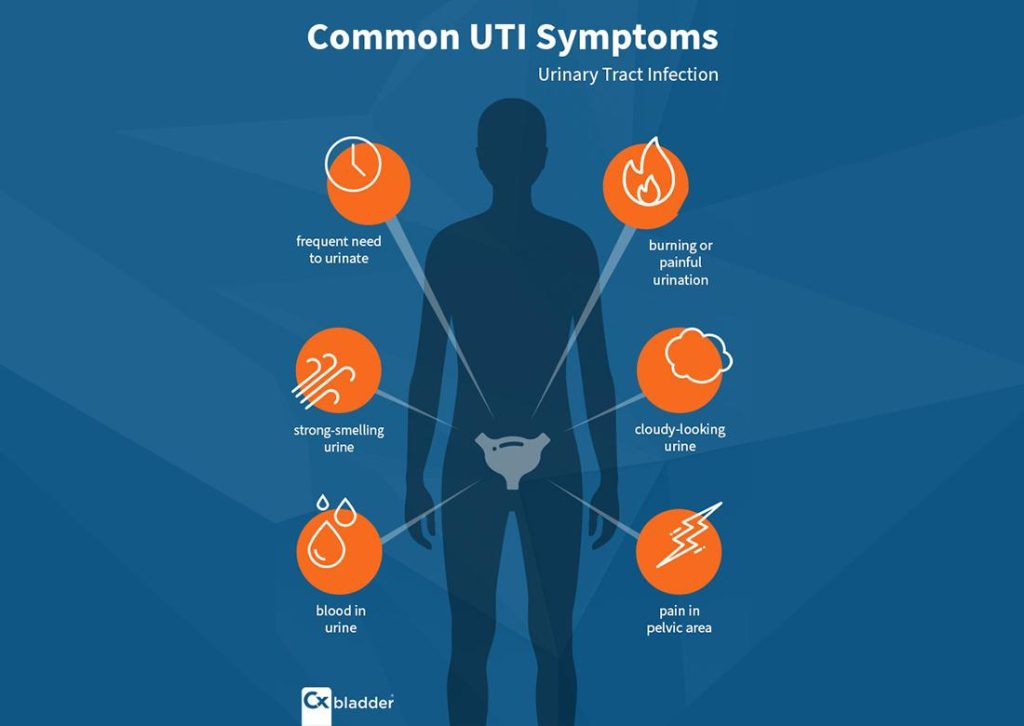
UTI symptoms typically involve the urinary tract, the bladder, the urethra, and, in more serious cases, the kidneys. Common signs include:
- A strong, persistent urge to urinate even when your bladder is nearly empty
- Painful urination with a burning feeling inside, not just on the surface
- Cloudy, dark, or foul-smelling urine, sometimes with a pink or red tint from blood
- Pressure or pain in your lower abdomen or pelvic area
If you develop a fever, chills, nausea, or back and side pain, that’s a warning sign that the infection may have reached your kidneys. A kidney infection is serious and needs immediate medical attention; don’t wait it out.
Yeast Infection Symptoms
A yeast infection works differently. The symptoms are mostly external, focused on the vagina and vulva rather than the urinary tract. You’ll likely notice:
- Intense itching in and around the vagina is often the most prominent sign
- Thick white vaginal discharge with a cottage cheese-like texture and little to no odor
- Redness, swelling, and soreness of the vulva
- Burning or pain during sex
- A burning feeling when urinating, but this is external, caused by urine touching already-inflamed skin
That last point is important. Both conditions cause burning during urination, but the source is different. With a UTI, the pain comes from inside the urethra. With a yeast infection, the pain comes from irritated skin on the outside.
Quick Comparison: Yeast Infection Vs UTI
| Symptom | UTI | Yeast Infection |
| Frequent urge to urinate | ✅ | ❌ |
| Internal burning during urination | ✅ | ❌ |
| External burning during urination | ❌ | ✅ |
| Cloudy or bloody urine | ✅ | ❌ |
| Intense vaginal itching | ❌ | ✅ |
| Thick white vaginal discharge | ❌ | ✅ |
| Vulvar redness or swelling | ❌ | ✅ |
Can One Cause the Other?
This is a question worth addressing because a lot of women experience both infections close together and assume one triggered the other.
A yeast infection does not directly cause a UTI. However, when the natural balance of your vaginal microbiome is disrupted, it can create conditions where harmful bacteria gain easier access to the urinary tract.
On the flip side, the antibiotics used to treat a UTI frequently lead to a yeast infection afterward. Antibiotics don’t discriminate; they wipe out the healthy bacteria in your vagina along with the bad, allowing candida to overgrow. It’s a frustrating cycle, but it’s also very common.
You can also have both infections at the same time, particularly if you’re pregnant, have diabetes, or have a compromised immune system.
Start Your Test Today For Your Peace Of Mind
How Are They Diagnosed?
Here’s something worth knowing: self-diagnosis is often wrong. Studies show that correct self-diagnosis for a first-time yeast infection ranges from just 11% to 34%. That’s a low success rate, and it means a lot of women end up treating the wrong condition.
A UTI is diagnosed with a urine test that checks for bacteria, blood, and white blood cells. A yeast infection is diagnosed through a pelvic exam and a vaginal swab that confirms the presence of Candida. Neither test is complicated, but getting the right one matters.
Treatment: Getting It Right the First Time
The treatments for these two infections are completely different, which is exactly why an accurate diagnosis matters so much.
For a UTI, you need prescription antibiotics. Common options include nitrofurantoin, trimethoprim-sulfamethoxazole, and fosfomycin. Staying hydrated and urinating frequently helps flush bacteria out of your system, but water alone won’t clear the infection. Always finish your full course of antibiotics, even if you feel better after a few days. Stopping early can cause the infection to return, and it may come back resistant to treatment.
For a yeast infection, antifungal medications are the treatment. Over-the-counter creams and suppositories containing clotrimazole or miconazole work well for mild-to-moderate infections. If you prefer an oral option, fluconazole (Diflucan) is a prescription pill that typically clears things up with a single dose. Symptoms often improve within a couple of days, though the full course of treatment can take up to seven days.
One important note: if this is your first suspected yeast infection, see a doctor before reaching for an OTC product. The symptoms overlap with bacterial vaginosis and some sexually transmitted infections, so a professional confirmation is the safest move.
Start Your Test Today For Your Peace Of Mind
When to See a Doctor
Certain situations call for professional care rather than self-treatment, no matter which infection you think you have. Reach out to your provider if:
- You’re unsure whether it’s a UTI or a yeast infection
- It’s your first time experiencing these symptoms
- Symptoms don’t clear up after treatment
- You have a fever, chills, back pain, or nausea
- You’re pregnant or have diabetes
- You notice blood in your urine
- You’re dealing with recurring infections, more than three UTIs in a year, or four or more yeast infections in a year
Recurring infections are a sign that something deeper may need to be addressed, and your doctor can help you put together a proper plan.
Prevention: Simple Habits That Make a Real Difference
You can’t completely prevent either infection, but a few consistent habits significantly lower your risk.
To reduce UTI risk: Drink enough water daily, urinate after sex, wipe from front to back, avoid holding urine for long periods, and stay away from scented feminine hygiene products that can irritate the urethra.
To reduce the risk of yeast infection: Wear breathable cotton underwear, change out of wet or sweaty clothes quickly, avoid douching, limit unnecessary antibiotic use, and keep blood sugar well-managed if you have diabetes. Some women also find that taking a daily probiotic helps maintain a healthy vaginal environment.
The Bottom Line
When it comes to UTI vs yeast infection, the clearest way to tell them apart is this: if your main complaint is a constant urge to urinate with internal burning and changes in your urine, think UTI. If the dominant symptom is intense itching, thick white vaginal discharge, and external irritation, think yeast infection.
Getting the right diagnosis leads to the right treatment, and that means faster relief with no unnecessary complications. When in doubt, skip the guesswork and talk to your doctor. Your body is giving you signals; your job is to respond to them correctly.